
Introduction to ISO 9001:2015
Although not compulsory ISO 9001:2015 quality management standard will apply in the UK from 15 September 2018
The International Organisation for Standardisation (ISO) has published a major revision of its ISO 9001 standard.
This standard is internationally recognised and defines the principles for quality management systems.
What is a Quality Management System (QMS)?
- A way of defining how an organisation can meet the requirements of its customers and other stakeholders affected by its work.
- ISO 9001 is based on the idea of continual improvement.
The adoption of a quality management system is a strategic decision for an organisation that can help to improve its overall performance and ensuring you consistently meet customer needs and enhance their satisfaction. This can lead to repeat custom, new clients and increased business for your organization.
The potential benefits to an organisation of implementing a quality management system based on this International Standard are:
- The ability to consistently provide products and services that meet customer and applicable statutory and regulatory requirements
- Facilitating opportunities to enhance customer satisfaction
- Addressing risks and opportunities associated with its context and objectives
- The ability to demonstrate conformity to specified quality management system requirements.
- Potential to expand into new markets, as some sectors including governments and public bodies require suppliers being certified to ISO 9001 before doing business.
What is ISO 9001:2015?
This standard sets out the requirements for a quality management system. It is intended to help businesses and organisations of all sizes to be more efficient and improve customer satisfaction.
Why has ISO 9001 been revised?
ISO 9001 has been updated to take into account the different challenges that businesses face in today’s digital age, and the major advancement in technology.
Increased globalisation has also changed the way we do business with organisations often operate more complex supply chains.
Along with increased expectations from customers, ISO 9001 needed to reflect these changes in order to remain relevant.
Organisations certified to the ISO 9001:2008 standard had 3 years to migrate their quality management system to the new edition with the transition period ending 15 September 2018.
Failure to do so by this date means your organisation will no longer be certified for this standard.
- The key changes in the standards:
- There is no longer a requirement for a quality manual.
- The focus is on context and risk-based thinking
- There is no longer a requirement of a management representative
- There is no specific clause for “Preventive Actions”.The following ISO 9001:2015 terms have been revised:
“document” and “records” have been replaced with the term “documented information”.
“documented procedure” has been replaced by maintained documented information”
“documented record has been replaced by “retained documented information”
The new version follows a new, higher level structure to make it easier to use in conjunction with other management system standards, with increased importance given to risk, and to provide confidence in the organisation’s ability to consistently provide customers with conforming goods and services and to enhance customer satisfaction.
By taking a risk-based approach, an organisation becomes proactive rather than purely reactive, preventing or reducing undesired effects and encouraging continual improvement.
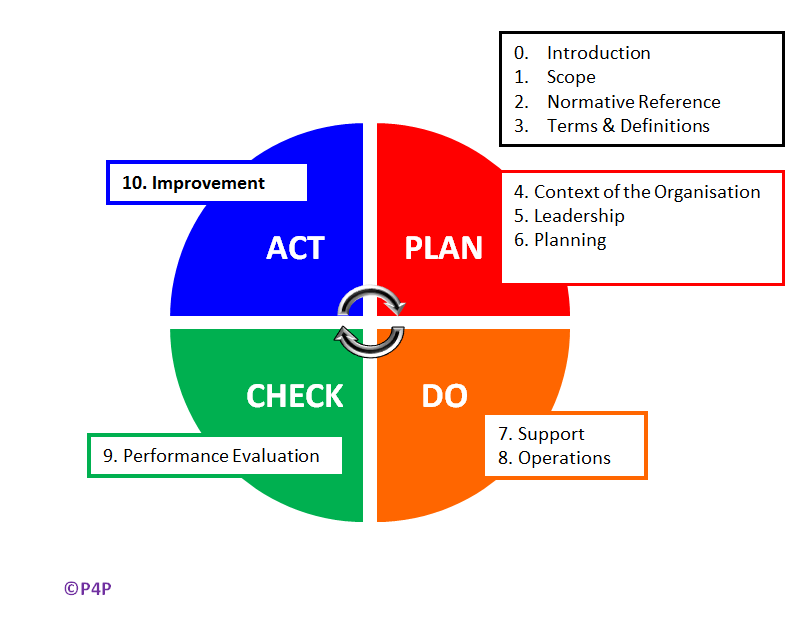
Plan-Do-Check-Act (PDCA) Model
This is a model for improvement that is sustained, rather than just a one-time quick fix, and it is for this reason that it is applied to the ISO 9001 standard. The ISO 9001 standard has, as a main goal, the continual improvement of the Quality Management System.
So what should your organisations do to get ISO 9001:2015 compliant?
Click here to download the full guide